
Sustainable Agriculture: Why We Were Founded, Where We Are Going
What is sustainable agriculture and what are its six core principles? The heavy consequences of industrial agriculture, the lessons of COP and Kyoto, the third phase of our cooperative, a hydroponic greenhouse and irrigation training: our article dated February 2024.
We wrote the first version of this article in autumn 2022, just before COP27 convened. In these days when we have left the first anniversary of the earthquake behind, as of 20 February 2024, we have reworked it from the start; because sustainable agriculture, the reason our cooperative was founded, has in this one year turned from a slogan into a matter of survival for us.
Agriculture, as everyone has come to understand in recent years, is among the most important locomotives of nations. It has been a continuing and evolving structure since the first human being. We all saw during the Covid-19 pandemic that the development level of countries that have not developed their agriculture counts for nothing: countries suddenly had to close their borders; prices rose suddenly and steeply, because of exports in producing countries and imports in consuming ones. The earthquake taught us the same lesson again at a regional scale. A village that cannot produce its own food depends on aid trucks in the first weeks.
What is sustainable agriculture?
Sustainable agriculture is a way of producing that protects natural resources, does not harm the environment, respects the balance of ecosystems and supports long-term agricultural production. It aims both to secure people’s food supply and to preserve the sustainability of the environment. We put it more briefly: leaving soil that our grandchildren can also sow.
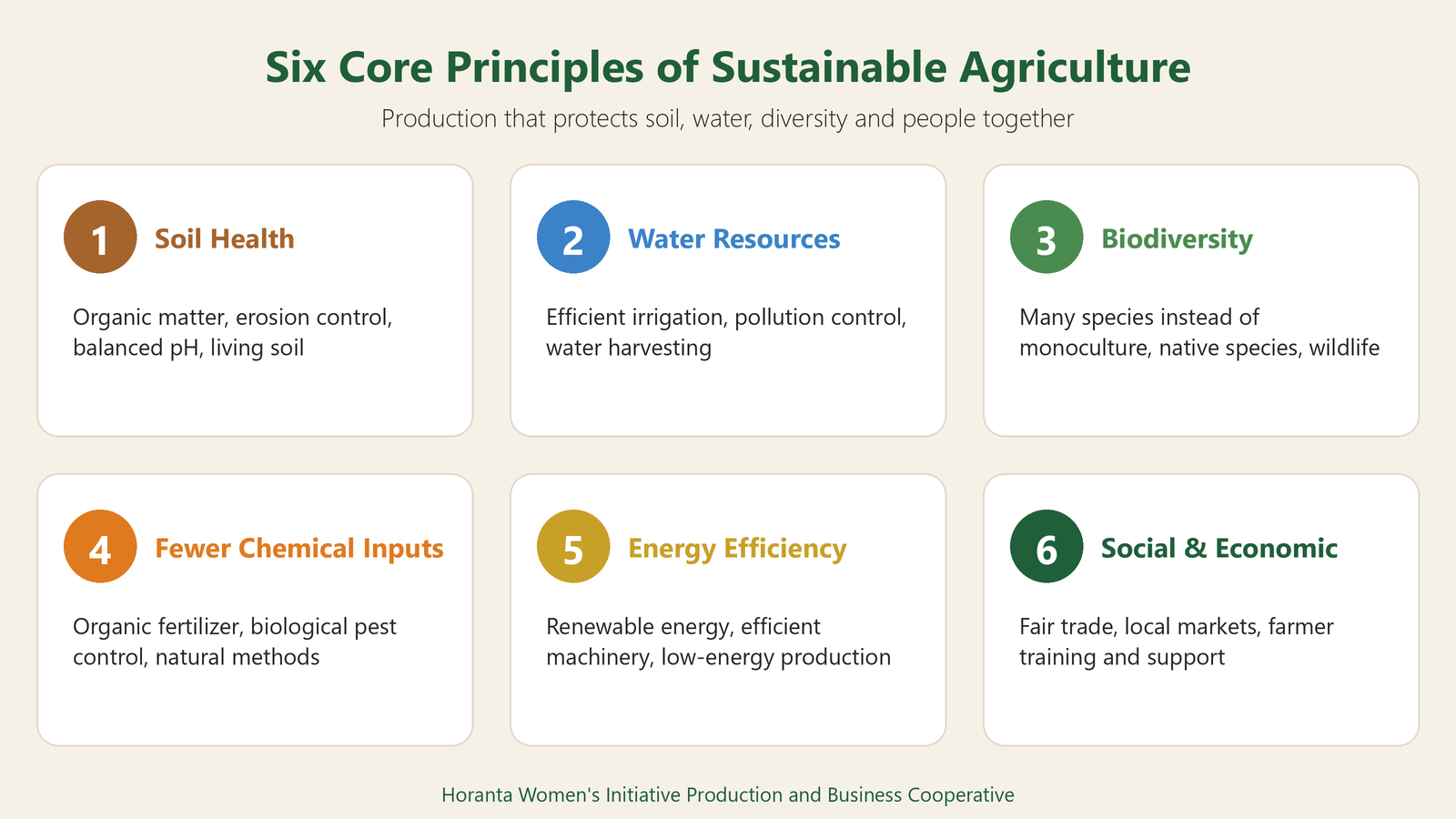
Six core principles
- Soil health. The fertility and health of the soil is the foundation of sustainable agriculture. Increasing organic matter content, preventing erosion, keeping soil acidity balanced and supporting the biological diversity in the soil are all required.
- Protection of water resources. Water is vital for agricultural production. Efficient use of irrigation water must be encouraged, pollution of water sources prevented, and water protected through measures such as erosion control.
- Biodiversity. Growing a wide variety of plant species instead of monoculture, supporting natural wildlife and protecting native species are important.
- Reducing chemical inputs. The goal is to reduce the use of chemical fertilizers and pesticides. Organic farming techniques, natural fertilizers and biological pest control serve this goal.
- Energy efficiency. Efficient use of farm machinery, renewable energy sources and reducing energy-intensive production methods are needed.
- Social and economic sustainability. The welfare of farmers and communities must be supported: fair trade, access to local markets, farmer training and support mechanisms.
Sustainable farming methods include approaches such as organic farming, ecological farming, agroecology, integrated farming and natural farming. They all share the same aim: to keep food production sustainable while protecting natural resources.
A dangerous game: industrial agriculture and its heavy consequences
The most important reason for founding our cooperative is sustainable farming practices and spreading them. As industry and technology developed, countries had to expand their agricultural vision in order to be more competitive. So industrial agriculture arrived, and with the expectation of greater profit, soil and nature began to be used without care. This is the case all over the world.
Humankind, by its nature, has wanted to live more comfortably, more easily, more healthily; by its very creation it has never hesitated to demand more. With the 20th century it began to upset the balance of nature, and today this disruption has peaked. Farming, once a simple local trade, has now reached industrial dimensions. Alongside large production, large competition and large profitability, it has now reached a scale that upsets the balance of nature. Production that harms human health is another dimension entirely: the rise in cancer, cardiovascular disease and diabetes in recent years are only a few examples.
Humankind, wanting to leave a better life to the new generations that are our future, is not aware that it is upsetting the balance of nature. The 1.5 to 2 degree temperature rise on the whole world’s agenda shows that we are about to leave future generations not a good standard of living but a desertifying world. States gather every year to try to do something about it, wanting to take a step even if only for show. The COP meetings are the best-known example.
What is COP, and what has it done so far?
COP stands for the Conference of the Parties under the United Nations Framework Convention on Climate Change (UNFCCC). When we wrote the first article, the 27th was about to convene in Sharm El-Sheikh; the latest was held last December in Dubai. Every year 197 parties, tens of thousands of negotiators, government officials, companies and activists come together to try to realise the goals of the 2015 Paris Agreement.
The UNFCCC was first signed by 154 countries at the Earth Summit in Rio de Janeiro in June 1992. Its aim was to curb “dangerous human interference with the climate system” by stabilising greenhouse gas concentrations in the atmosphere. The convention called for continuous cooperation among governments through scientific research, regular meetings and policy agreements so that fragile ecosystems are not unfairly harmed, the global food supply is not disrupted and economic development can proceed sustainably.
The Kyoto Protocol was the first major agreement among the parties. Signed in December 1997, it set strict targets for 37 industrialised countries and the European Union to reduce emissions of six gases, but did not cover major emitters such as the United States, China and India. It came into force in February 2005; it aimed to bring emissions 5 percent below 1990 levels in the first phase (2008-2012) and 18 percent below in the second phase (2013-2020), extended by the Doha Amendment. Despite this, a 2012 report of the UN Environment Programme found that emissions had risen by 32 percent between 1990 and 2010. The report once again stressed the need to replace dependence on fossil fuels with renewable energy.
The lesson we draw from this history is this: states that have been meeting for thirty years could not stop emissions. Whoever the causes and those responsible may be, we believe it is necessary to be solution-oriented regardless. That is why we launched Our Movement from Local to Global.
Why sustainable agriculture?
Because there is no other way. The soil is exhausted; chemical and toxic substances have accumulated in it from the unnecessary fertilizer and pesticide used until now. Water has decreased; as we described in our climate change article, the wells of the Amik Plain go deeper every year. Input prices, meanwhile, eat up the farmer’s profit. For us, sustainable agriculture is not an ideology but the result shown by the calculator: fewer inputs, healthier produce, longer-lived soil.
Cooperatives, and women’s cooperatives in particular, are the most natural vehicle for this transformation. Together we can carry the cost of trials, training and marketing that a single farmer could not dare to bear alone. Please get in touch with us to support our movement from local to global. We need the comments and ideas of every section of society; we believe this must be done for our future.
Our cooperative in its third phase
The first phase was to be founded, the second to start production. In the third phase, Our Movement from Local to Global goes into the field: it will talk, inform, and organise training sessions and meetings. The other important pillar of the movement is this: after examining the requests that come to us on site, we will report the needs of the applicant person or institution, what should and should not be done; we will accompany the request at every step from beginning to end and bring it to completion; afterwards we will observe for two more years and record the data. We want to measure gas emissions such as carbon dioxide and methane, the carbon footprint, operating costs, yield records and profitability rates, and share them in charts. What is not measured cannot be improved.
To support organic farming and be able to give advice, we will do our own production in a greenhouse of 5 to 15 decares, inform our farmers from there and encourage them towards a profitable business. All our work will proceed in coordination with Hatay Mustafa Kemal University. We are following the award-winning work of our Metropolitan Mayor Mr Lütfü Savaş on hydroponic farming projects and look forward to his support.
Hydroponic and similar farming systems
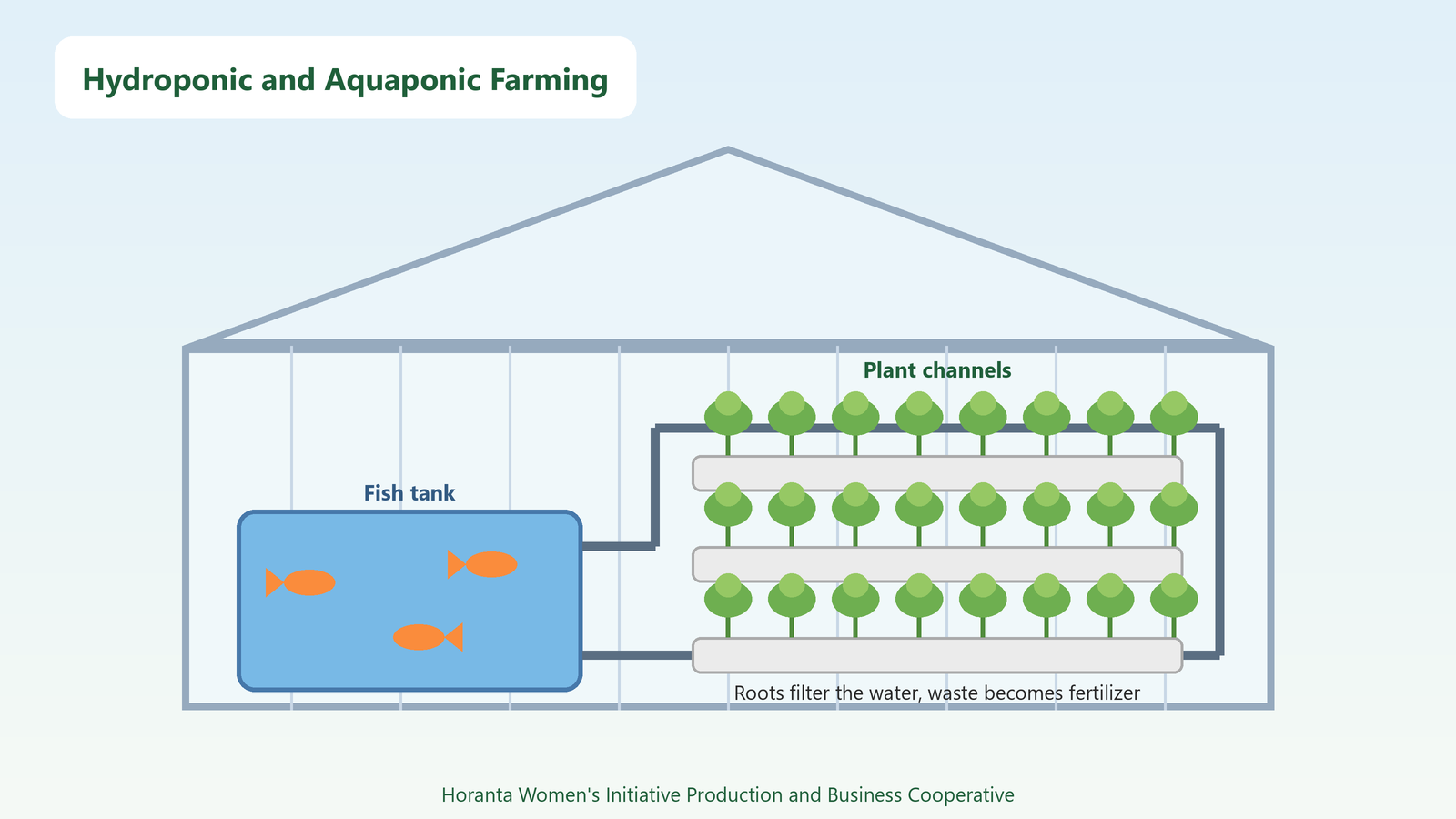
Hatay Metropolitan Municipality set up a greenhouse integrating hydroponic (soilless) and aquaponic (aquatic) systems under the SİEU Green project, part of a European Commission grant programme. In the aquaponic technique, fish waste is used as a biological fertilizer source for the plants, and the plant roots act as a natural filter for the fish pond. The municipality plans to run this greenhouse as a living laboratory open to the public, entrepreneurs and students under a “Continuous Education Centre” model, and to teach the technique to a group of around 400 disadvantaged women and Syrian guest women through workshops showing how it can be applied on a balcony or in a kitchen.
Mayor Savaş says the system allows production away from the chemical build-up in the soil and from fungal, bacterial and viral diseases, and that a lettuce which takes an average of fifty days to reach the table from the field grows in ten to fifteen days in this system; he describes it as “tremendously beneficial in terms of health, time and economy”. You can read the full story on the Hatay Metropolitan Municipality website. We too want to try this system in our own greenhouse and share the results here.
What the state has done on irrigation, and what we will add
The Ministry of Agriculture and Forestry runs training and extension activities so that farmers can plan and operate pressurised irrigation systems and integrate digital tools into them. According to the ministry’s published figures, under the “Pressurised Irrigation Systems” and “Effective and Efficient Irrigation Systems” modular training programmes, 73 sessions were held in 26 provinces and 1,329 farmers received certificates; only 16 percent of those certified were women. Study visits to universities, research institutions and equipment manufacturers were also organised so that farmers could see solar-powered irrigation, water harvesting, subsurface drip irrigation, greenhouse irrigation and closed drainage applications on site; the problems of 554 farmers were discussed with experts at workshops, field days and online seminars; and 9,586 extension materials on topics from the harm of over-irrigation to subsurface drip irrigation were distributed.
These figures tell us two things. First, the state has a training infrastructure and it can be used. Second, women farmers are not being reached; the 16 percent shows this clearly. As a women’s cooperative we want to fill exactly this gap: to bring the ministry’s training to the village, to the doorstep of the woman farmer, and to demonstrate what is learned in our own greenhouse.
To every farmer, every institution and every reader of this article, our word is the same: we are not looking for causes or culprits; we are looking for solutions. We await your ideas through our contact page.

Related Posts
Keep Reading

Olive Oil and Thyme Brine: Benefits and Usage Guide
We have prepared a practical and reliable guide about Olive Oil and Thyme Brine: Benefits and Usage Guide.…
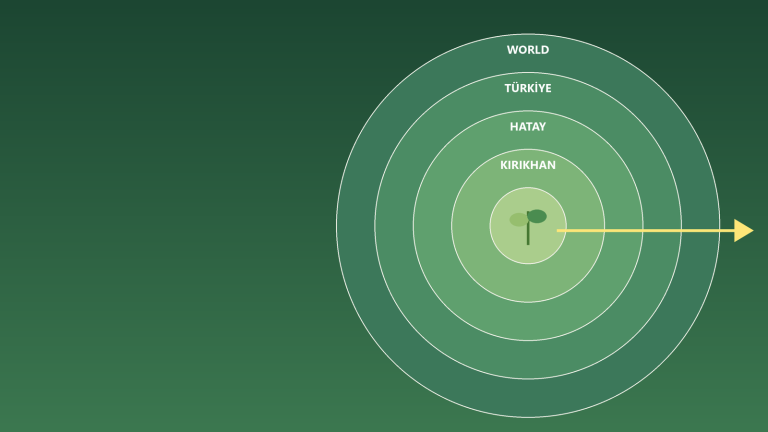
Our Movement from Local to Global: Who Is Responsible for the Desertifying World?
We officially launched Our Movement from Local to Global in November 2022. A year has passed; in between…
Our Climate Change Project: A Roadmap for Fighting Drought
We first published this article in February 2023, just before the earthquake. In the ten months since, both…